
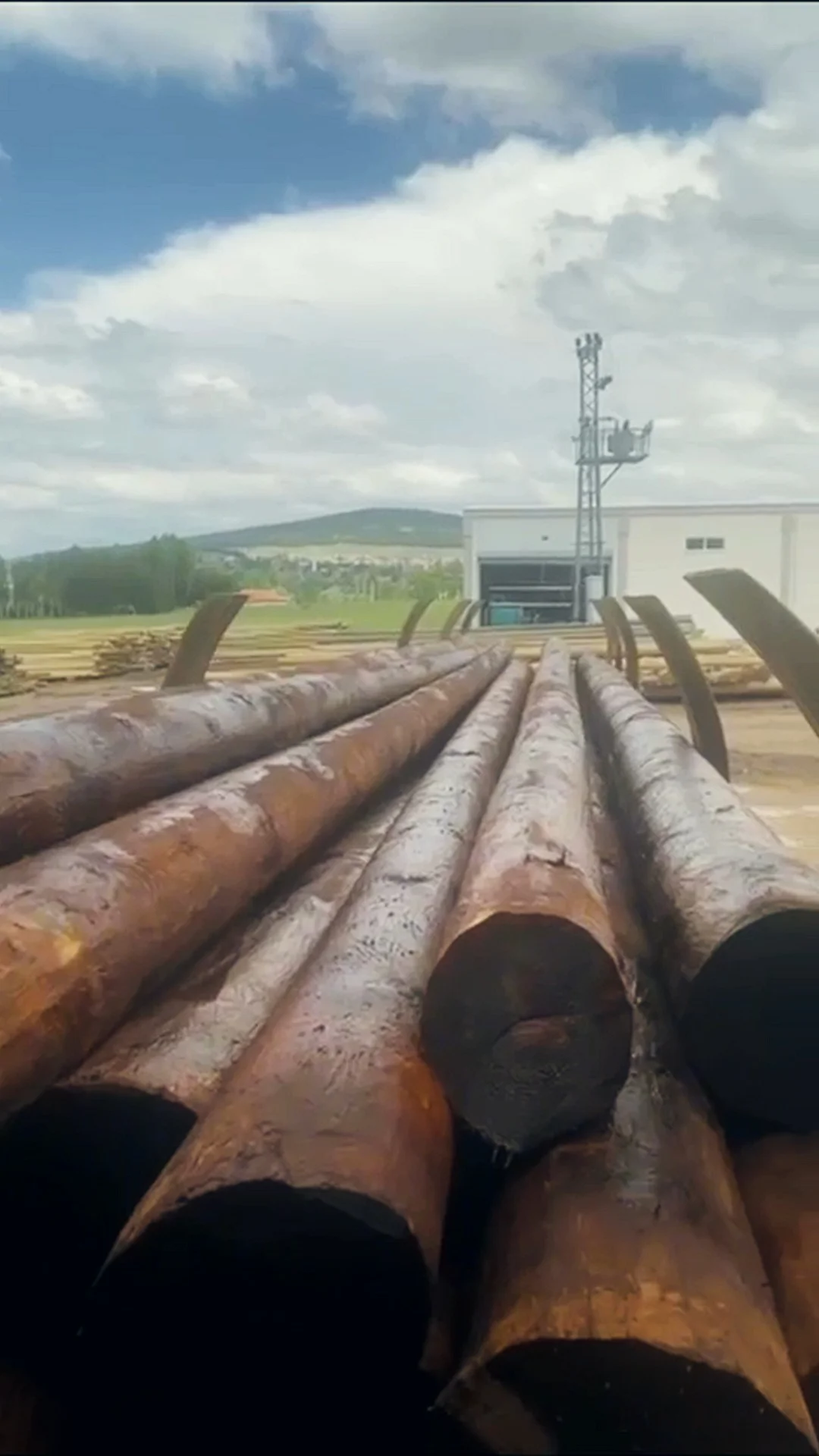
Wooden Poles
Impregnated Electricity Pole
Impregnated pine electricity pole for power lines, classes H, O and A to TS EN 14229.
- Wood
- Pine
- Treatment
- Vacuum-pressure
Our impregnated electricity poles are made of pine for power transmission lines and distribution networks. The logs are debarked at our facility and impregnated in the vacuum-pressure process, which protects them against moisture, fungi and pests.
The poles are produced 9, 10, 11 and 12 m long in light (H), medium (O) and heavy (A) classes. Top, middle and butt diameters follow TS EN 14229 and are listed in the technical table below. Compared with concrete and steel, a wooden pole is light and flexible, and easy to transport, erect and work on.
Advantages
- Light and flexible.
- Easy to transport and to erect.
- Reusable by changing the foundation.
- Symmetrical.
- No painting is needed.
- Easy to climb.
- More reliable against leakage currents.
Areas of use
Power transmission lines and distribution networks.
Technical specifications
Material
- Wood
- Pine
- Treatment
- Vacuum-pressure
Dimensions
- Length
- 9–12m
- Pole classes
- H, O, A
| Pole type | Top diameter (cm) | Middle diameter (cm) | Butt diameter (cm) | ||||
|---|---|---|---|---|---|---|---|
| Min | Max | Min | Max | Min | Max | ||
| 9 m ± 0.05 | 9-H | 12 | 14 | 15 | 17 | 18 | 20 |
| 9-O | 15 | 17 | 18 | 20 | 21 | 23 | |
| 9-A | 18 | 20 | 21 | 23 | 24 | 26 | |
| 10 m ± 0.05 | 10-H | 12 | 14 | 15 | 17 | 19 | 21 |
| 10-O | 15 | 17 | 18 | 20 | 22 | 24 | |
| 10-A | 18 | 20 | 21 | 23 | 25 | 27 | |
| 11 m ± 0.05 | 11-H | 13 | 15 | 17 | 19 | 20 | 22 |
| 11-O | 16 | 18 | 20 | 22 | 23 | 25 | |
| 11-A | 19 | 21 | 23 | 25 | 26 | 28 | |
| 12 m ± 0.05 | 12-H | 13 | 15 | 17 | 19 | 21 | 23 |
| 12-O | 16 | 18 | 20 | 22 | 24 | 26 | |
| 12-A | 19 | 21 | 23 | 25 | 27 | 29 | |
Scroll the table sideways to see every column.
The taper of the wooden poles is calculated according to TS EN 14229. H: light, O: medium, A: heavy pole.
StandardsTS EN 14229
Frequently asked questions
What is impregnation?
Impregnation is the most suitable solution, ecologically and economically. Trees are the longest-living beings on earth; impregnation reduces the consumption of wood and extends the life of the wood in use. Impregnation is the process of soaking chemical preservatives into the wood with different methods. It keeps bacteria, woodworm, termites and other pests from damaging the wood and makes its life ten times longer.
What are the advantages of wooden poles over concrete and steel?
- Light and flexible.
- Easy to transport and to erect.
- Reusable by changing the foundation.
- Symmetrical.
- No painting is needed.
- Easy to climb.
- More reliable against leakage currents.
What do the pole classes H, O and A mean?
H stands for light, O for medium and A for heavy poles. For each length (9, 10, 11 and 12 m) the minimum and maximum top, middle and butt diameters follow TS EN 14229; the values are in the technical table on the product page.
Request a quote
Send us the dimensions, quantity and delivery location and we will prepare a quote for you.